


18 Aug Phytoceutics® Phytofemme™ PCOSupport™: The Nutrients That Matter for PCOS and Hormonal Health
If you’ve been researching supplements for hormonal or metabolic health, you’ve probably come across inositol, alpha-lipoic acid, and chromium. And there’s a good reason for that: these nutrients have well-documented roles in supporting female reproductive health, healthy glucose metabolism, and hormonal balance.
Inositol: Why the Ratio Matters
Myo-inositol and D-chiro-inositol are two naturally occurring forms of inositol that have been studied for their role in insulin signalling and normal ovarian function. Research on women’s hormonal health has frequently used a 40:1 ratio of myo-inositol to D-chiro-inositol, reflecting the naturally occurring ratio found in the body’s own tissues.
In one study, 34 women with a specific PCOS phenotype took a daily myo- and D-chiro-inositol supplement in this 40:1 ratio for three months. By the end of the study, researchers observed improvements in BMI and insulin resistance markers, along with shifts in testosterone, LH, SHBG, and oestradiol levels.
Alpha-lipoic Acid: For Metabolic Support
Alpha-lipoic acid (ALA) is a naturally occurring antioxidant compound that contributes to macronutrient metabolism and the maintenance of normal blood glucose levels.
In a six-month study, 71 women with PCOS took 800 mg of ALA daily alongside either 1 000 mg or 2 000 mg of myo-inositol. Around 71% of participants saw improved cycle regularity, while insulin-resistant women showed bigger metabolic shifts and insulin-sensitive women showed bigger reproductive hormone shifts.
Chromium: For Blood Glucose Balance
Chromium is a trace mineral that contributes to macronutrient metabolism and the maintenance of normal blood glucose levels.
A review of 15 clinical studies involving more than 1 600 participants found that most trials using chromium picolinate showed measurable benefits for blood glucose, insulin, cholesterol, and triglyceride levels.
Magnesium, Zinc & Folate: The Supporting Cast
Magnesium is involved in more than 300 enzymatic reactions in the body and helps support psychological, muscle, and nervous system health, as well as energy production and sleep quality.
Zinc contributes to hormone regulation, immune health, and cell division, and has been studied for its role in egg quality, fertility, and reproduction.
Folate, the naturally occurring form of vitamin B9, plays an essential role in DNA and RNA synthesis and normal cell division. It’s especially important during periods of rapid cellular growth, such as pregnancy.
Vitamin D3, K2, B12 & CoQ10: A Supporting Micronutrient Matrix
- Vitamin D3 helps support endocrine function and overall wellbeing.
- Vitamin K2 works alongside D3 to help support bone and cardiovascular health.
- Vitamin B12 contributes to normal energy metabolism and helps reduce tiredness and fatigue.
- CoQ10 helps support cellular energy production.
Phytofemme™ PCOSupport™: One Formula, Once a Day
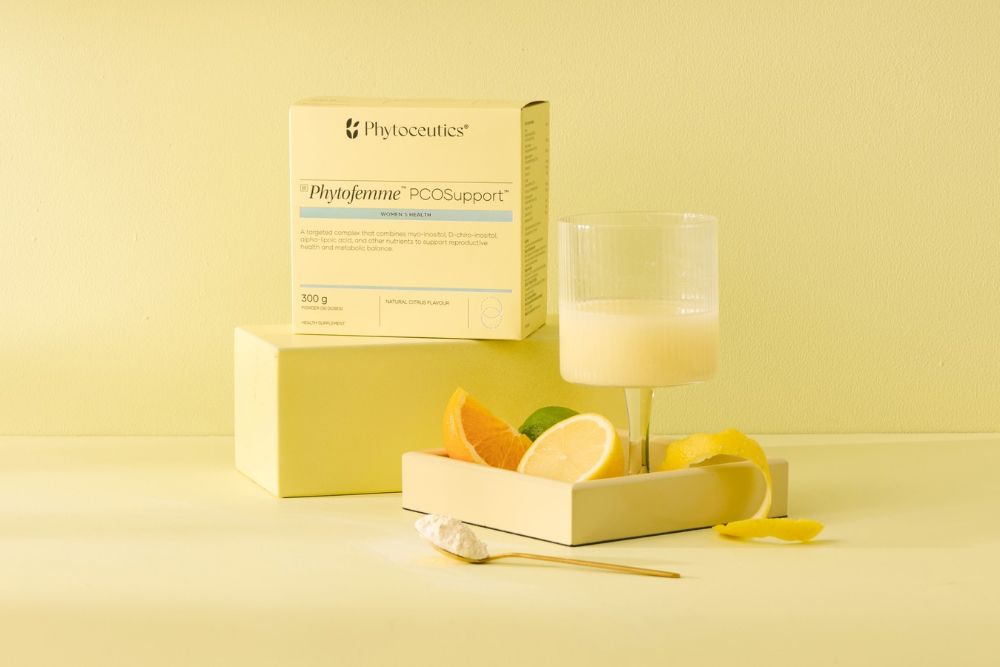
Phytoceutics® Phytofemme™ PCOSupport™ brings these nutrients together in a single daily sachet with myo-inositol and D-chiro-inositol in the researched 40:1 ratio, alongside alpha-lipoic acid, chromium, magnesium bisglycinate (250 mg elemental magnesium), zinc oxide (25 mg elemental zinc), activated folate (L-5-methyltetrahydrofolate), and vitamin D3, K2, B12, and CoQ10.
The activated folate is worth a closer look. Unlike standard folic acid, L-5-methyltetrahydrofolate is a form the body can use directly, without the same conversion step. This may be particularly relevant for women with certain MTHFR gene variants, which can affect folate metabolism.
Rather than sourcing each nutrient separately, PCOSupport™ brings them together in one daily dose. Simply mix with 200 ml of water and drink daily, with or without food.
Shop Phytoceutics® Phytofemme™ PCOSupport™ at Faithful to Nature
Disclaimer: For adults 18 years and older. This unregistered medicine has not been evaluated by SAHPRA for its quality, safety or intended use. The studies referenced above were conducted outside South Africa and have not been evaluated by SAHPRA; results may not be directly applicable to every individual. If symptoms persist, consult your healthcare practitioner.
As of May 2026, PCOS has been renamed PMOS – Polyendocrine Metabolic Ovarian Syndrome. Medical experts changed the name to move away from a misleading label and to better reflect the condition’s hormonal, endocrine, and metabolic nature.
Blog credit: Phytoceutics®
No Comments