Our

Saffron
Saffron
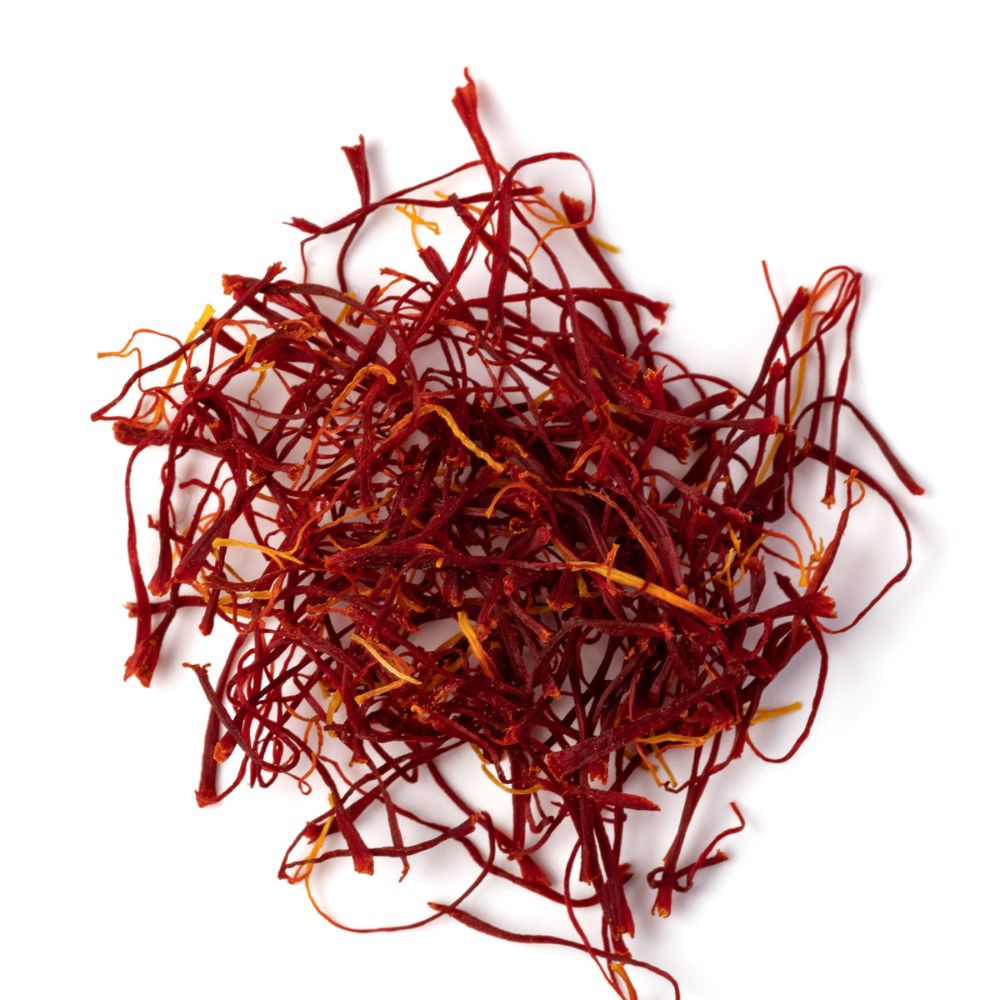
Crocus sativusSaffron is the dried stigma of the autumn-flowering Crocus sativus, picked by hand and loved for its deep golden colour and earthy aroma. It's rich in crocin and safranal, two compounds researchers are studying for their gentle support of mood, including through the emotional ups and downs of menopause. It's also the most labour-intensive spice in the world.
FtN Saffron Products ↓Saffron's story begins on Bronze Age Crete, where Minoan frescoes from around 1700 BCE show women and monkeys gathering the same long, dark-red stigmas we use today. It's the earliest known picture of saffron as a cultivated crop. Over roughly 3,500 years of trade, it travelled to Persia, where the Khorasan region is still the world's main growing area, and on to Kashmir, the Mediterranean and beyond, along the same routes as gold and silk.
Each flower gives just three delicate stigmas, picked by hand one at a time, and it takes about 150 flowers to make a single gram of dried threads. It's no surprise that saffron has at times been worth more than its weight in gold, and it's still the world's most expensive spice.
References: Mann L et al. Ancient artworks and crocus genetics both support saffron's origin in early Greece. Frontiers in Plant Science, 2022. View on PMC. Mousavi SZ, Bathaie SZ. Historical uses of saffron. Avicenna Journal of Phytomedicine, 2011. View on PMCKey benefits of saffron
Here's what the research says, with the studies behind each point.
Support for mood changes in menopause
In a 12-week study, 86 women in perimenopause took either 28mg of saffron extract a day (split into two doses) or a placebo. The women taking saffron saw their anxiety scores fall by 33% and their depression scores by 32%, a bigger improvement than the placebo group. Saffron didn't make a noticeable difference to hot flushes in this study, so it's best thought of as support for the emotional side of menopause rather than the physical symptoms.
Source: Lopresti AL, Smith SJ. The effects of saffron extract (affron) on menopausal symptoms in women during perimenopause: a randomised, double-blind, placebo-controlled study. Journal of Menopausal Medicine, 2021.Gentle mood support
Saffron has been used to lift the spirits since the days of traditional Persian medicine, and modern research is now catching up. In randomised trials, around 30mg a day eased low mood more than a placebo did, and some trials found it worked about as well as standard antidepressant medication over 6 to 8 weeks.
Source: Akhondzadeh S et al. A placebo controlled randomized clinical trial of Crocus sativus L. on depression. Journal of Clinical Pharmacy and Therapeutics, 2019.Antioxidant support
Saffron's colour comes from crocin and crocetin, carotenoids from the same pigment family as beta-carotene. In lab and animal studies they act as antioxidants, but there's much less research in people than for mood and menopause. We see this as a promising traditional use with early science behind it, rather than a proven benefit.
What does the science say about saffron?
For a spice, saffron has been studied unusually well. Many herbal ingredients rely mostly on tradition, but saffron has been through randomised, double-blind, placebo-controlled trials for both perimenopause and low mood. In some of the depression trials, it held its own against standard medications such as fluoxetine and imipramine, which few botanicals can say. The evidence is strongest for mood and the emotional side of menopause. Claims about antioxidant and skin benefits rest on lighter, mostly lab-based research.
You might also come across early studies on saffron and ADHD. They're interesting, but small, so we're not treating them as settled yet. We'll keep following the research as it grows.
Source: Lopresti AL, Smith SJ. The effects of saffron extract (affron) on menopausal symptoms in women during perimenopause. Journal of Menopausal Medicine, 2021.How does saffron compare for mood and menopause support?
Saffron, ashwagandha and brahmi (Bacopa monnieri) are three well-researched herbs for mood and calm. Each one works in its own way.
| Saffron | Ashwagandha | Brahmi (Bacopa) | |
|---|---|---|---|
| Primary use | Mood balance, menopause support | Stress and cortisol balance | Memory, calm focus |
| How it works | Supports serotonin activity | Lowers cortisol via the HPA axis | Lowers cortisol, supports cholinergic and serotonergic activity |
| Typical onset | 2-6 weeks in trials | 4-8 weeks, some trials show effects within days | 4-12 weeks; some acute mood effects same-day at higher doses |
| Evidence strength | Several trials against placebo and standard antidepressants | Several trials for stress, anxiety and cortisol | Several trials for anxiety and memory |
| Menopause-specific research | Yes, a trial designed for women in perimenopause | Limited, mostly general stress research | Limited menopause-specific data |
| Typical daily dose | 20-30mg extract | 240-600mg standardised root extract | 300-450mg standardised extract (20-55% bacosides) |
| Taste and form | Mild, earthy; capsule, extract or gummy | Earthy, bitter; capsule, powder or gummy | Bitter, grassy; capsule or tablet |
How do I know if saffron is right for me?
Saffron comes in a few different forms, and it suits some people more than others. Here's a quick guide.
Saffron may suit you if you'd like to
- Ease low mood or mood swings during perimenopause or menopause
- Try something for mood that's been tested against a placebo
- Take a capsule, extract or gummy that most people tolerate well
- Add a well-researched option alongside the care you already have
Check with your doctor first if you
- Are pregnant and thinking of taking saffron as a supplement rather than in cooking
- Take antidepressants, as there's a small theoretical risk of serotonin syndrome
- Take blood thinners or blood pressure medication
- Have bipolar disorder or low blood pressure
Saffron is usually well tolerated at normal supplement doses. This is general information and not a substitute for medical advice. South Africa doesn't yet have specific SAHPRA rules for saffron supplements, so if you're thinking of giving it to a child, please speak to a paediatrician or healthcare provider first.
Why Faithful to Nature loves saffron
Saffron has earned its place on our shelves by meeting an exceptionally high standard for natural botanicals. Beyond its rich tradition, it is backed by double-blind, placebo-controlled clinical trials, including dedicated research supporting women through perimenopause. That level of scientific evidence is rare in the natural health space, and saffron has it.
Remarkably versatile, this botanical fits effortlessly into your daily life whether you prefer extracts, capsules, tablets, or gummies. It offers targeted support for balanced mood, menopausal comfort, and everyday stress relief.
Because precious spices like saffron are frequently diluted across the industry, our strict ingredient policy does the heavy lifting for you. We independently verify the purity of every formula we carry, ensuring every bottle delivers authentic, active saffron free from synthetic fillers or unwanted additives.
Products Containing Saffron
Browse saffron extracts, capsules and gummies from natural brands we trust.
-
sku150869

-
sku65005

-
sku164668

-
sku164666

Frequently Asked Questions
What is saffron good for?
Saffron is best researched for supporting mood and easing the psychological symptoms of perimenopause, such as anxiety and low mood. It has been tested in randomised, placebo-controlled trials, which is rare for a spice. Its colour comes from crocin, a carotenoid in the same pigment family as beta-carotene, which shows antioxidant activity in lab studies, though human evidence is still early.
Does saffron help with menopause symptoms?
Saffron may help with the emotional side of perimenopause. In a 12-week trial of 86 perimenopausal women, 28mg of saffron extract a day led to a 33% drop in anxiety scores and a 32% drop in depression scores, a bigger improvement than placebo. It didn't significantly reduce hot flushes, so it suits mood support more than physical symptoms. See our range of menopause and perimenopause support.
How much saffron should I take a day?
Most clinical trials used 20 to 30mg of standardised saffron extract a day, sometimes split into two doses. Standardised extracts deliver a consistent amount of crocin and safranal in every capsule, which a pinch of kitchen saffron can't promise. Follow the dose on your product label and don't go above it without advice from a healthcare provider.
How long does saffron take to work?
Saffron works gradually. Clinical trials have reported mood improvements from around 2 to 6 weeks, and most studies ran for 6 to 12 weeks in total, so taking it every day matters more than the time of day. If you've noticed no change after about two months, check in with your healthcare provider about whether it suits you.
What are the side effects of saffron?
Saffron extract is generally well tolerated at supplement doses of around 30mg a day. Reported side effects tend to be mild, such as nausea, headache, dry mouth or a change in appetite. Avoid therapeutic doses during pregnancy, and check with your doctor first if you have bipolar disorder or low blood pressure.
Can I take saffron with antidepressants?
Check with your doctor before taking saffron alongside antidepressants. Saffron appears to support serotonin activity, so combining it with SSRIs or similar medication carries a theoretical risk of serotonin syndrome. Ask about blood thinners and blood pressure medication too. Saffron can be a complementary option, but it isn't a replacement for prescribed treatment.
Can saffron help with ADHD?
Research on saffron and ADHD is promising but early. A small six-week study in children found saffron extract eased symptoms about as well as standard medication, but larger trials are needed and it shouldn't replace prescribed treatment. We don't currently stock saffron products made for children. Read our article on saffron and ADHD, and speak to a paediatrician before giving saffron to a child.
Is saffron or ashwagandha better for mood?
Saffron and ashwagandha support mood in different ways. Saffron appears to work through serotonin activity and has a dedicated trial in perimenopausal women, while ashwagandha is better known for lowering cortisol and easing stress. Sceletium, a South African succulent traditionally used for mood and stress, is another option. Compare the research on our ashwagandha and sceletium ingredient pages.
Why is saffron so expensive?
Saffron is the world's most expensive spice because every thread is picked by hand. Each flower gives just three stigmas, and it takes around 150 flowers to make a single gram. That price makes saffron one of the most commonly adulterated spices, sometimes bulked out with safflower or turmeric, so every saffron product we stock is screened against our ingredient policy.