Our
Our 

Synthetic Ingredients to Avoid
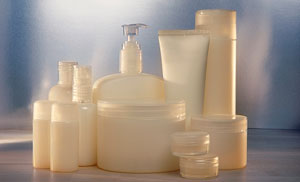
You will find these nasties in your home detergents (from your spot remover to carpet cleaner), your beauty products and your personal care products. Unfortunately, there has been no move to make manufacturers of cosmetic and cleaning products list their ingredients, but by 2009 it will be law that all personal care products in South Africa have a full list of ingredients.
Parabens (Methyl, Propyl, Butyl and Ethyl)
98% or cosmetic products contain parabens. Parabens are endocrine disrupters which mean they may disturb the hormone balance in your body and can cause allergic reactions. British researchers found traces of it in twenty women who had breast cancer. Parabens are believed to act like the female hormone estrogen and high levels of estrogen can cause some women to develop breast cancer.
“The industry response is that these chemicals have been cleared for use by the relevant authorities (FDA and ECC) and have been used for decades. The link between smoking and cancer took 50 years to gain public support. Health concerns raised by the Parabens will hopefully be recognized sooner.” (Taken from http://www.esseskincare.com/en-za/)
Propylene Glycol (PEG)
It is one of the most common ingredients in cosmetics and is highly controversial. Many say it is a harmful irritant known to cause damage to the kidneys whilst a few believe it is safe. But consider this: the Material Safety Data Sheet for propylene glycol warns workers handling this chemical to avoid skin contact.
Sodium Lauryl/Laureth Sulfate
A known skin irritant and enhances allergic response to other toxins and allergens. The chemical can react with other ingredients to form cancer-causing nitrosamines. Sodium Lauryl Sulfate is used as a lathering agent. It is present in ninety per cent of commercial shampoos, as well as skin creams and some brands of toothpaste. It was found to be safe by the CIR expert panel in the 1980’s but new information is being considered as to the safety of the ingredient.
Diethanolamine (DEA), Triethanolamine (TEA), Monoethanolamine (MEA)
In 1999 a National Toxicology Program found an association between cancer and tumors in laboratory animals and the application of diethanolamine (DEA) and certain DEA-related ingredients to their skin. The FDA is still considering legal actions. As the study used a pure concentration of the ingredient it has been debated as to whether there is any real cause for concern.
The principal toxic effect of TEA has been linked to over alkalinity in animals. It is an irritant.
Both DEA and TEA are also known to combine with nitrates to form cancer-causing nitrosamines.
(If a product contains nitrites (used as a preservative or present as a contaminant not listed on labels) a chemical reaction can occur either during manufacturing or after a product is made. There is no way to know which products contain nitrosamines because government does not require manufacturers to disclose this information on the label.)
Diazolidinyl Urea, Imidazolidinyl Urea
Preservatives release formaldehyde. It is estimated that 20 per cent of people exposed to this chemical will experience an allergic reaction. Exposure to formaldehyde may cause joint pain, depression, headaches, chest pains, ear infections, chronic fatigue, dizziness and loss of sleep. In lab tests, formaldehyde has caused cancer and damaged DNA. Its use has been banned in cosmetics in Japan and Sweden
PVP/VA Copolymer
A petroleum-derived chemical used in hairsprays, styling aids and other cosmetics. It can be considered toxic, since inhaled particles can damage the lungs of sensitive persons. Padimate-O, also known as octyl dimethyl, PABA is found mainly in sunscreens. Like DEA, it is a nitrosamine-forming agent and there is concern that the energy absorbed by this sunscreen is then turned into free radicals, which may actually increase the risk of skin cancer.
Stearalkonium Chloride
Developed by the fabric industry as a fabric softener, it is a lot cheaper and easier to use in hair conditioning formulas than proteins or herbals, which are beneficial to the hair. It has been reported to cause allergic reactions and the CIR Expert Panel are reconsidering whether it can be deemed as safe.
Synthetic Colours
Used to make cosmetics “pretty”, synthetic colours, along with synthetic hair dyes, should be avoided at all costs as many synthetic colours can be carcinogenic. They are listed as FD&C or D&C, followed by a colour and a number. Example: FD&C Red No. 6, or D&C Green No. 6.
Synthetic Fragrances
Fragrance on a label can indicate the presence of up to 4,000 separate ingredients. There is no way to know what the chemicals are, since on the label it will simply read “fragrance”. Some problems caused by these chemicals include headaches, dizziness, rash, hyper pigmentation, violent coughing, vomiting, skin irritation—the list goes on. They can also trigger asthma.
Pthalates
Pthalates are used to keep fragrance chemicals in solution. They are found in almost all fragrances and manufacturers are allowed to list them under the name fragrance or parfum. Phthalates are used to enhance fragrances, as solvents, and to denature alcohol. These chemicals have been shown to enter the bloodstream and concentrate in fat cells. They are extremely potent estrogen mimics and some are 10 000 times more potent than estrogen itself. High levels of estrogen have been known to cause cancer.
DEP is the phthalate found in the highest levels in humans and a study published in Environmental Health Perspectives (December 2002) found that DEP is damaging to the DNA of sperm in adult men at current levels of exposure. DNA damage to sperm can lead to infertility and may also be linked to miscarriages, birth defects, infertility and cancer in offspring. Recent product tests found the chemical in every fragrance tested in the United States.
Manufacturers are not required to list phthalates on product labels, so they are difficult to avoid but phthalates have been banned by all the major organic certifiers in the world.
Talc
Talc is a naturally occurring mineral. Some reports show it to be carcinogenic when inhaled. In addition, women who regularly use talc in the genital area are at increased risk for ovarian cancer. Many pediatricians now tell parents to avoid using talc on babies as it can cause respiratory distress, sometimes resulting in death. Talc in liquid formulations poses minimal risk.
EDTA
Found in bleach and foaming agents in detergents. Can irritate skin and mucous membranes.
Petrolatum
Also known as mineral oil jelly, liquid Vaseline, Paraffinum lLquidum and baby oil. It is extremely cheap hence it’s widespread use. It can cause photosensitivity and strips natural oils from the skin, causing chapping, dryness and premature ageing. It also prevents the elimination of toxins from the body and can therefore cause acne.
Imidazolidinyl urea and DMDN hydantoin
These are formaldehyde-forming preservatives and it is the second most common preservative after parabens causing contact dermatitis. It can also cause joint pain, allergies, depression, headaches, chest pain, chronic fatigue, dizziness, insomnia and asthma. It can also weaken the immune system and cause cancer.
Lead
Lead is a known carcinogen and hormone disruptor. It is readily absorbed through the skin, and accumulates in the bones. It causes neurological damage and behaviour abnormalities, and large accumulations can result in leg cramps, muscle weakness, numbness and depression. It can be found in some hair dyes.
Nonylphenols
This is an estrogen-mimicking chemical and is used for its detergent properties. It can be found in some plastics, as well as shaving creams, shampoos and hair colours. It can be created when certain chemicals commonly found in personal care products break down. Nonylphenols can be a component in polyvinylchloride (PVC), a compound often found in acrylic nails. They are persistent in the environment and of such concern that many European countries are phasing them out. Some manufacturers have voluntarily discontinued their use.
Phenylenediamine
Used in permanent hair dyes, phenylenediamine can cause eczema, bronchial asthma, gastritis, skin irritation and even death. It is also a carcinogen. It can react with other chemicals to cause photosensitivity. The US Food and Drug Administration proposed legislation which would have required warning labels on products, advising that this ingredient can penetrate skin and has been determined to cause cancer in lab animals. If passed, beauty salons would have had to post warnings for their customers. Cosmetic industry lobbyists defeated the proposal.